The Bank of Korea’s Press Conferences Now Draw a Retail Trading Audience
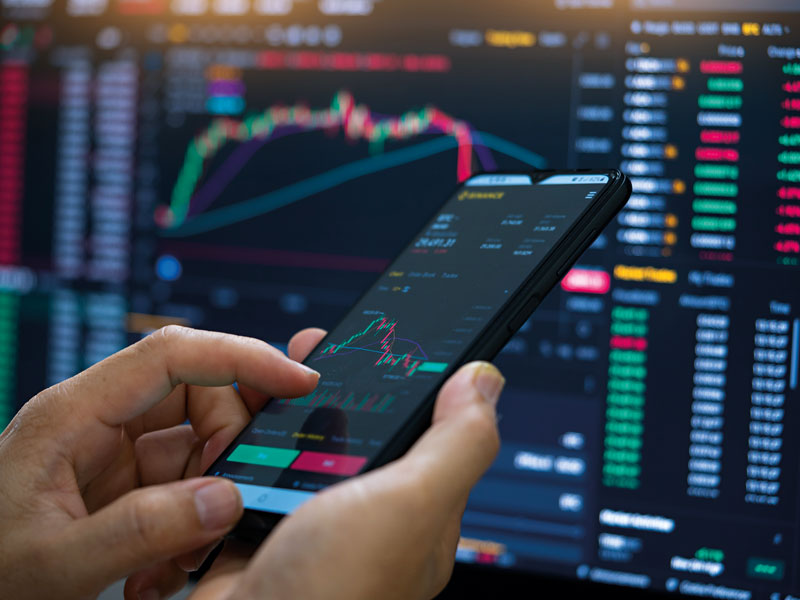
There was a time when the only people at South Korea’s central bank briefings were institutional analysts, financial journalists and the kind of specialist commentators who make a living dissecting interest rate language. That narrow audience has expanded in recent years, with retail trading forums now hosting live discussion threads timed to coincide with Bank of Korea press conferences. Participants who would never have bothered to listen to a monetary policy briefing a decade ago now follow the governor’s comments closely, particularly when the won is already experiencing significant volatility.
The governor’s comments on the base rate have implications that extend well beyond local borrowing costs, as any change in policy direction can affect the won’s value against major currencies. These scheduled briefings are market-moving events that retail traders have learned to treat almost like earnings calls are treated by equity investors, but the result here can affect an entire currency rather than the share price of a single company. That broader impact has attracted participants whose primary interest is in forex and currency trading, rather than domestic monetary policy itself.
Parsing language has become a spectator sport in its own right at these events. Traders dissect specific phrases used by the governor, looking for subtle shifts in tone that might hint at future policy direction before any official change follows. A single word choice, interpreted as slightly more hawkish or dovish than previous statements, can ripple through won-denominated positions within minutes. Forums devoted to currency trading quickly fill with competing interpretations after a press conference, sometimes contradicting one another entirely based on which phrase a particular poster chose to emphasize.
Brokerages have responded by creating economic calendars and push notifications that highlight upcoming Bank of Korea events, giving them attention once largely reserved for Federal Reserve announcements. This reflects a broader change in how domestic monetary policy reaches retail investors. Traders no longer have to search through financial news sites to discover when an important central bank event is taking place. Instead, notifications can put the announcement directly in front of someone checking a trading application during the day.
The relationship between interest rates and the won also gives these announcements particular importance for Korean traders. A higher rate can affect the relative attractiveness of won-denominated assets, while expectations of future rate cuts can influence sentiment toward the currency. Traders therefore watch not only the decision itself but also the language surrounding inflation, economic growth, employment and global conditions. This makes the press conference more than a simple announcement, because the market is constantly trying to determine what the Bank of Korea might do next.
Not every trader listening to these briefings is experienced enough to correctly interpret monetary policy signals. Some financial educators have expressed concern that new entrants could overreact to the language of a press conference without understanding the broader economic context. For example, a rate hold could be interpreted as a signal that cuts are coming soon, and currency traders could position themselves on the basis of assumptions that turn out to be wrong. The resulting losses can be especially sharp in the case of leverage and rapid changes in market expectations.
This has encouraged some brokers and trading communities to provide basic macroeconomic explanations alongside event notifications. Rather than simply telling users when a Bank of Korea decision is scheduled, educational material can explain why inflation, economic growth and interest-rate expectations matter for the won. The goal is to give newer traders enough context to understand that a single sentence from a central bank governor does not necessarily provide a complete trading signal.
The shift has less to do with the Bank of Korea itself becoming more newsworthy and more to do with how financial information is consumed by ordinary investors. A press conference that might once have been completely ignored by retail participants can now generate live commentary, predictions and arguments across Korean trading communities. For people involved in currency trading, the event has become part of the regular market calendar, reflecting a broader change in how closely retail investors follow the forces that influence the won.